🧠
Near-Frontier Intelligence
Scores 55 on Artificial Analysis's Intelligence Index (#4 of 215), three points behind Claude Opus 5.5. No open-weight model has come this close to the frontier.
Moonshot AI · Launched October 23, 2026
Moonshot's new flagship is a post-trained Kimi K3 — the same 3T-class base, 1M-token context and native vision, with far more post-training. It scores 55 on Artificial Analysis (#4 of 215), runs about twice as fast and costs $2 / $10 per million tokens, a third less than K3. Live on kimi.com, Kimi Code and the API; open weights promised by November 4, 2026.
New · October 23, 2026
Moonshot's upgraded flagship is a post-trained Kimi K3: smarter, faster and a third cheaper.
It is live on kimi.com, Kimi Work, Kimi Code (Plus plan and up) and the API as
kimi-k3.1-pro.
Kimi K3.1 Pro is the newest flagship AI model from Moonshot AI, released on October 23, 2026 (often searched as “Kimi 3.1”). It is a post-trained version of Kimi K3 with far more post-training compute: it scores 55 on Artificial Analysis's index (#4 overall, behind only Claude Opus 5.5, Claude Sonnet 5.5 and Muse Wonder Full), runs about twice as fast on Moonshot's API, and costs $2 / $10 per million tokens, a third less than K3. Open weights are promised by November 4, 2026. Read the full K3.1 Pro guide.
The base model, Kimi K3, launched on July 16, 2026. It is the largest open-weight model ever released — a 2.8-trillion-parameter mixture-of-experts system that routes each token through just 16 of its 896 specialized experts, delivering frontier intelligence at practical cost. (Many people also search for it as “Kimi 3.0” — the official name is Kimi K3. Full specifications below.)
K3 introduces a 1-million-token context window, native image and video understanding, and two architectural breakthroughs — Kimi Delta Attention and Attention Residuals — that make it up to 6.3× faster at long contexts and ~2.5× more scaling-efficient than Kimi K2. On Artificial Analysis's current index (v4.3.2) it scores 44, #3 among large open-weight models. Newer closed models such as Claude Opus 5.5 and GPT-6 Astra score higher, but K3 remains one of the strongest models you can download and self-host.
The weights have been public on Hugging Face since July 27, 2026 under the custom Kimi K3 License, and the model is served by Moonshot's API, Amazon Bedrock (since September 18) and 15+ other providers. See our latest guides for pricing, hardware and head-to-head comparisons.
Watch · 10 official K3.1 Pro demos
SOURCE: MOONSHOT AI — KIMI K3.1 PRO LAUNCH BLOG · SOME PROJECTS USE CREDITED THIRD-PARTY ASSETS (TEXTURES, HDRI SKIES, 3D SCANS), LISTED IN MOONSHOT'S POST
Benchmarks · Kimi K3.1 Pro · Official + independent
On Moonshot's October 23 launch suite, Kimi K3.1 Pro finishes first on SWE-Marathon, Humanity's Last Exam (tools), OfficeQA Pro, Automation Bench and BrowseComp, and lands 0.7 points behind Claude Opus 5.5 on Terminal-Bench 4.0 (Kimi K3 scored about 13%). Independent testers at Artificial Analysis score it 55 on index v4.3.2, #4 of 215 models, behind only Opus 5.5 (58), Sonnet 5.5 and Muse Wonder Full (56). It still trails clearly on Terminal-Bench Science, OSWorld and exploit work.
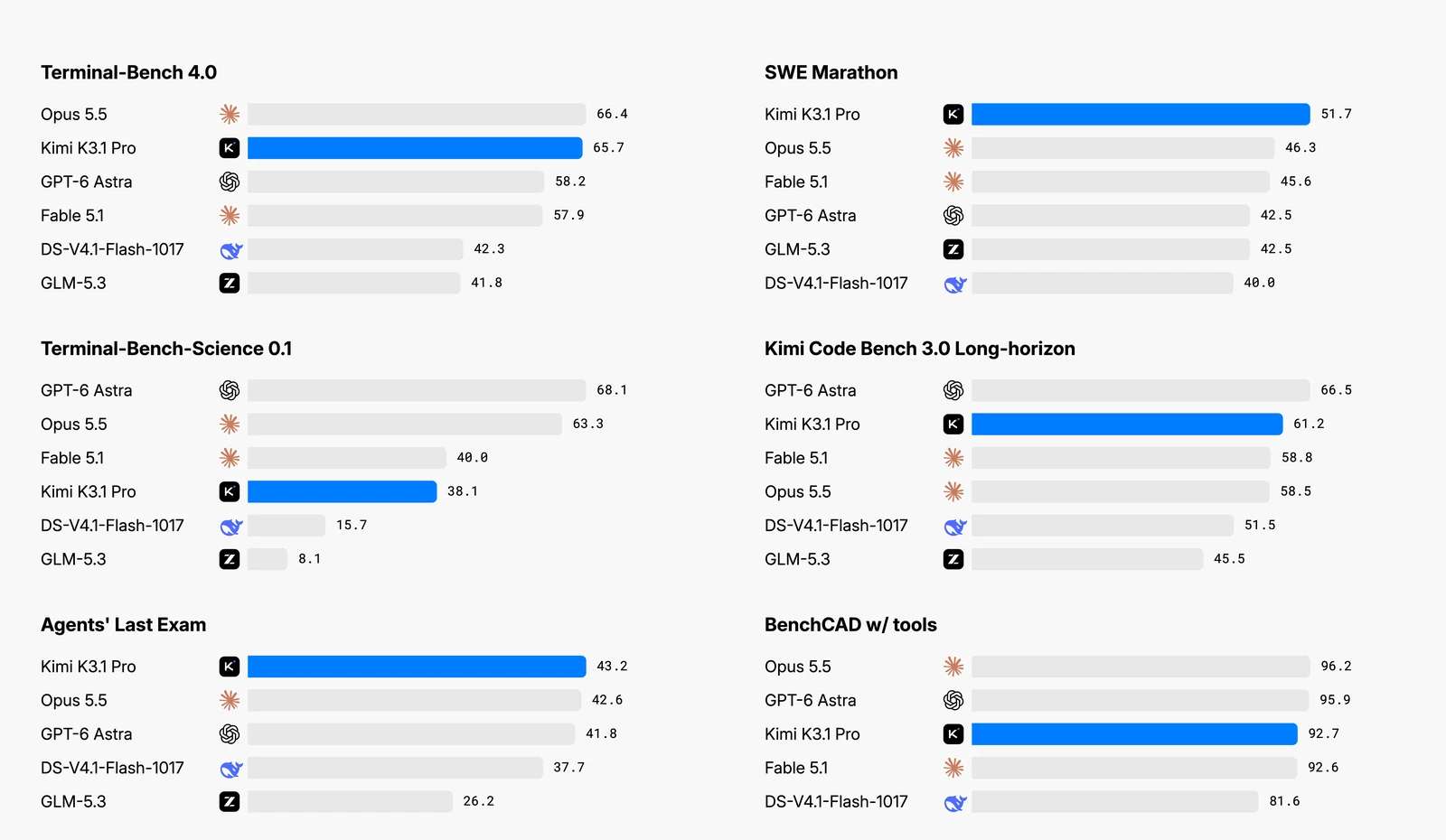
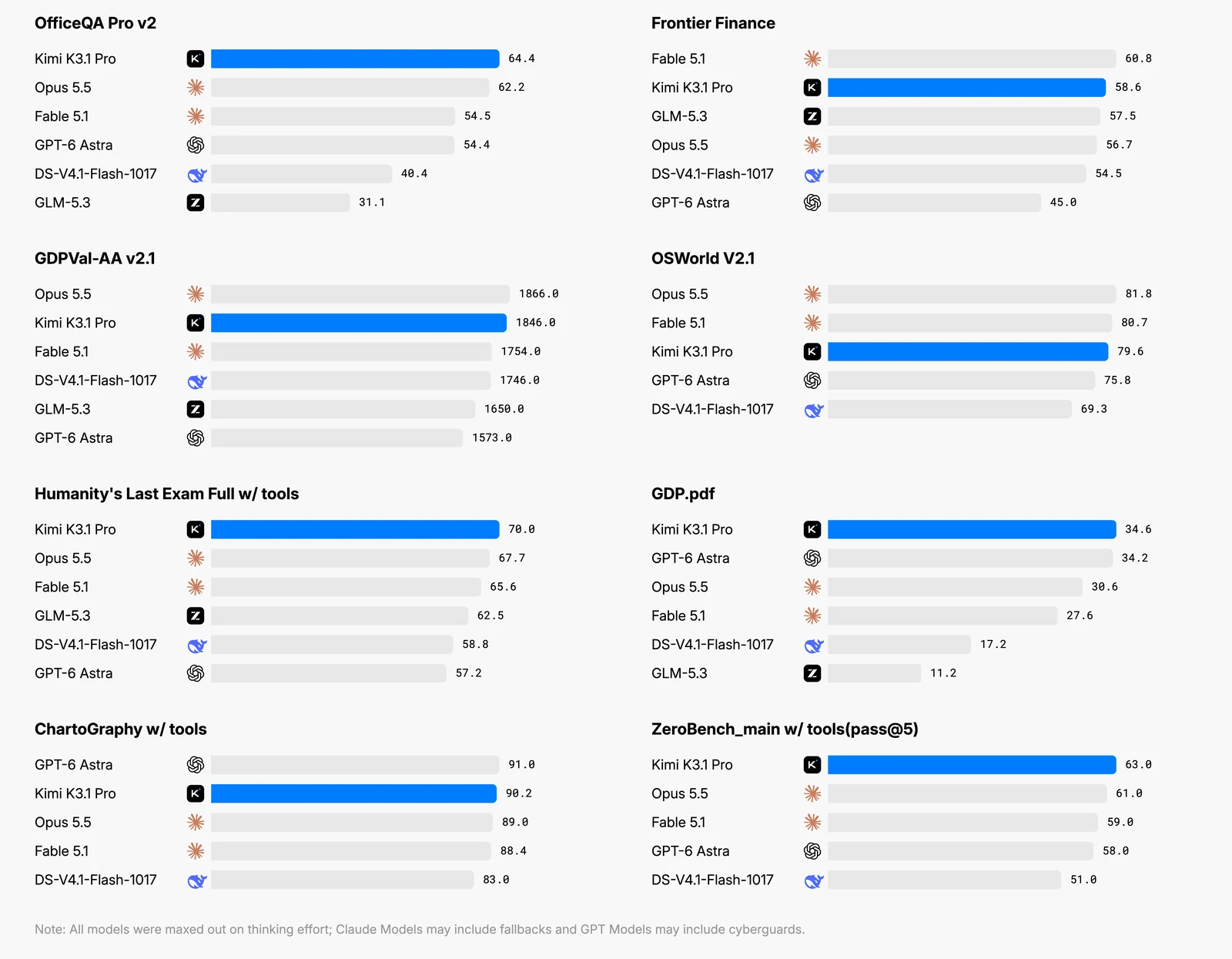
FROM MOONSHOT'S OFFICIAL LAUNCH CHARTS · TOP 5 SHOWN
SWE-Marathon v1.1 — K3.1 Pro #1
Humanity's Last Exam (tools) — K3.1 Pro #1
OfficeQA Pro v2 — K3.1 Pro #1
Automation Bench-AA — K3.1 Pro #1
BrowseComp — K3.1 Pro #1
Terminal-Bench 4.0 — 0.7 behind #1
Notes: all scores are vendor-reported by Moonshot at max reasoning effort; Claude results may include fallback behavior. Coding benchmarks ran in the Claude Code harness. ExploitBench is lower by design, because Moonshot removed cyber-attack data before the open-weight release. Kimi K3's July launch benchmarks are in our complete K3 guide; the full K3.1 Pro breakdown is in the K3.1 Pro guide.
LMArena · Community-voted · Kimi K3 at launch
Real users, blind votes. At its July launch, Kimi K3 (the model K3.1 Pro is post-trained from) jumped 17 places from K2.6 (#18 → #1) with a 76% pairwise win rate — vs 63% for Claude Fable 5 and 58% for GPT-5.6 Sol.
FRONTEND CODE ARENA — ELO
#1
Frontend Arena
76%
pairwise win rate
#9
Text Arena (was #38)
#1 IN 6 OF 7 FRONTEND DOMAINS
SOURCE: @ARENA ON X · JULY 16–17, 2026
Features
Six reasons K3.1 Pro matters: near-frontier quality, at half the frontier price, with weights on the way.
Scores 55 on Artificial Analysis's Intelligence Index (#4 of 215), three points behind Claude Opus 5.5. No open-weight model has come this close to the frontier.
$2 input / $10 output per million tokens, $0.20 cache hits, flat across the full 1M context. That is half Claude Opus 5.5's per-token price.
On Moonshot's hardest hallucination stress test, the wrong-claim rate fell from 23.4% for K3 to 8.3%, ahead of Opus 5.5 (15.0%).
Artificial Analysis measures ~73.5 output tokens/sec on Moonshot's API, up from ~35 for K3. A Highspeed tier runs 2-3x faster again at double the price.
65.7% on Terminal-Bench 4.0 (Opus 5.5: 66.4%, K3: ~13%) and #1 on SWE-Marathon at 51.7. Works in Kimi Code, Claude Code and Unity, Unreal and Godot projects.
Moonshot promises the full weights by November 4, 2026, with cyber-attack data removed first. Same 1M context and native image and video input as K3. License not yet announced.
Under the hood
K3.1 Pro is a post-trained Kimi K3, so it runs on the same base: the attention and routing math Moonshot introduced with K3 in July. The gains in K3.1 Pro come from much larger post-training, not a new architecture.

A linear-attention variant that forms the efficient backbone for scaling — up to 6.3× faster decoding at million-token contexts, with a prefill-cache implementation contributed to vLLM.
Selectively retrieves representations across model depth instead of accumulating them uniformly — roughly +25% training efficiency at under 2% extra compute.
Extreme sparsity: each token activates just 16 of 896 experts (~104B of 2.8T parameters), keeping inference practical at 3T-class scale.
Derives expert allocation directly from router-score quantiles — loss-free load balancing with no auxiliary loss, no learning rate, no sensitive hyperparameter.
Extends the Muon optimizer by optimizing attention heads independently for more adaptive learning at scale.
Sigmoid Tanh Unit improves activation control; Gated MLA improves attention selectivity — together enabling stable 2.8T-scale training.
QAT from the SFT stage onward — MXFP4 weights with MXFP8 activations for broad hardware compatibility and cheap serving.
The combined structural changes convert compute into intelligence ~2.5× more effectively than the K2 generation.
FULL DETAILS IN THE K3 TECHNICAL REPORT · K3 WEIGHTS JULY 27, 2026 · K3.1 PRO WEIGHTS PROMISED BY NOV 4, 2026
Game engines · 3D · CAD
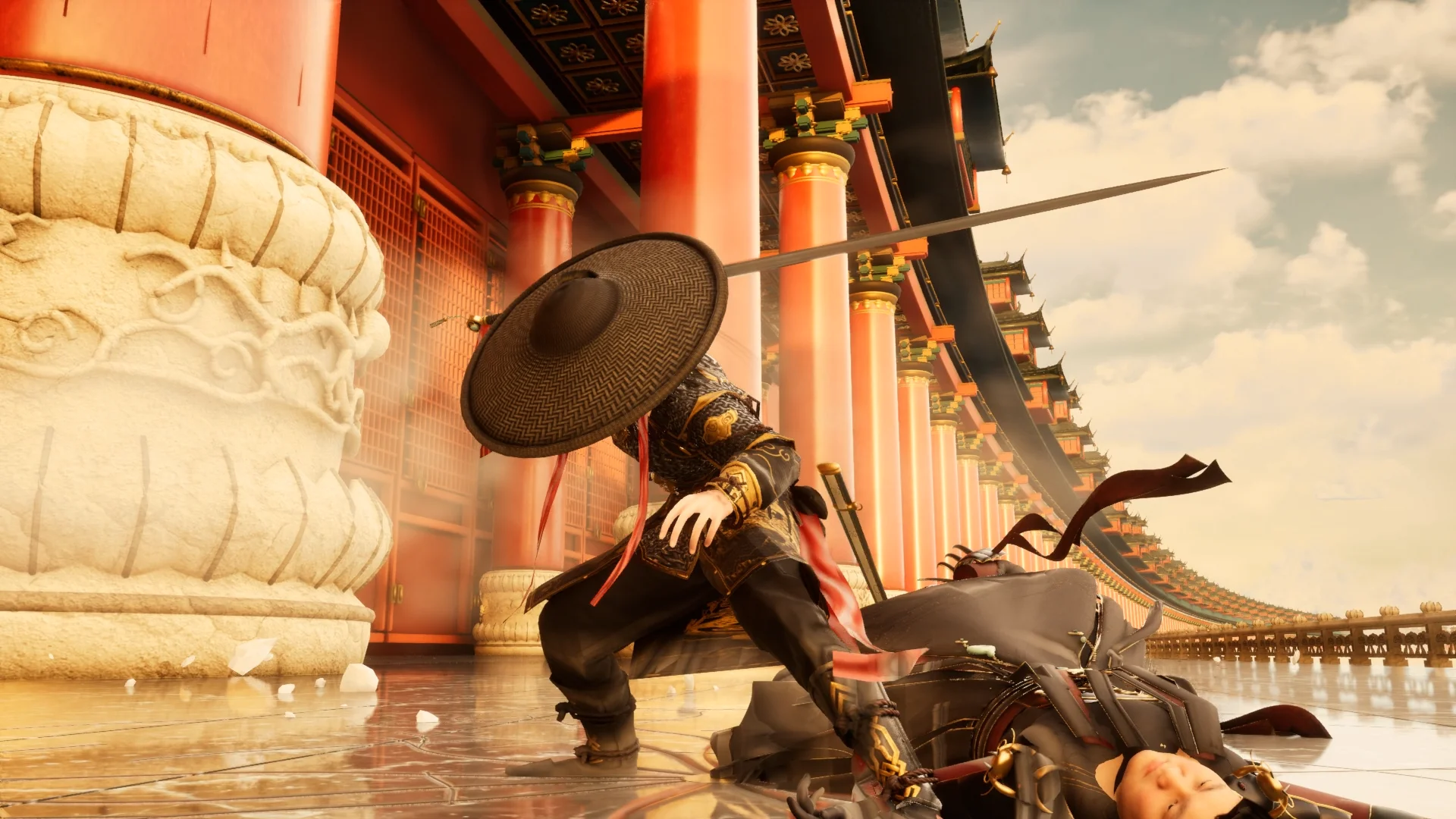
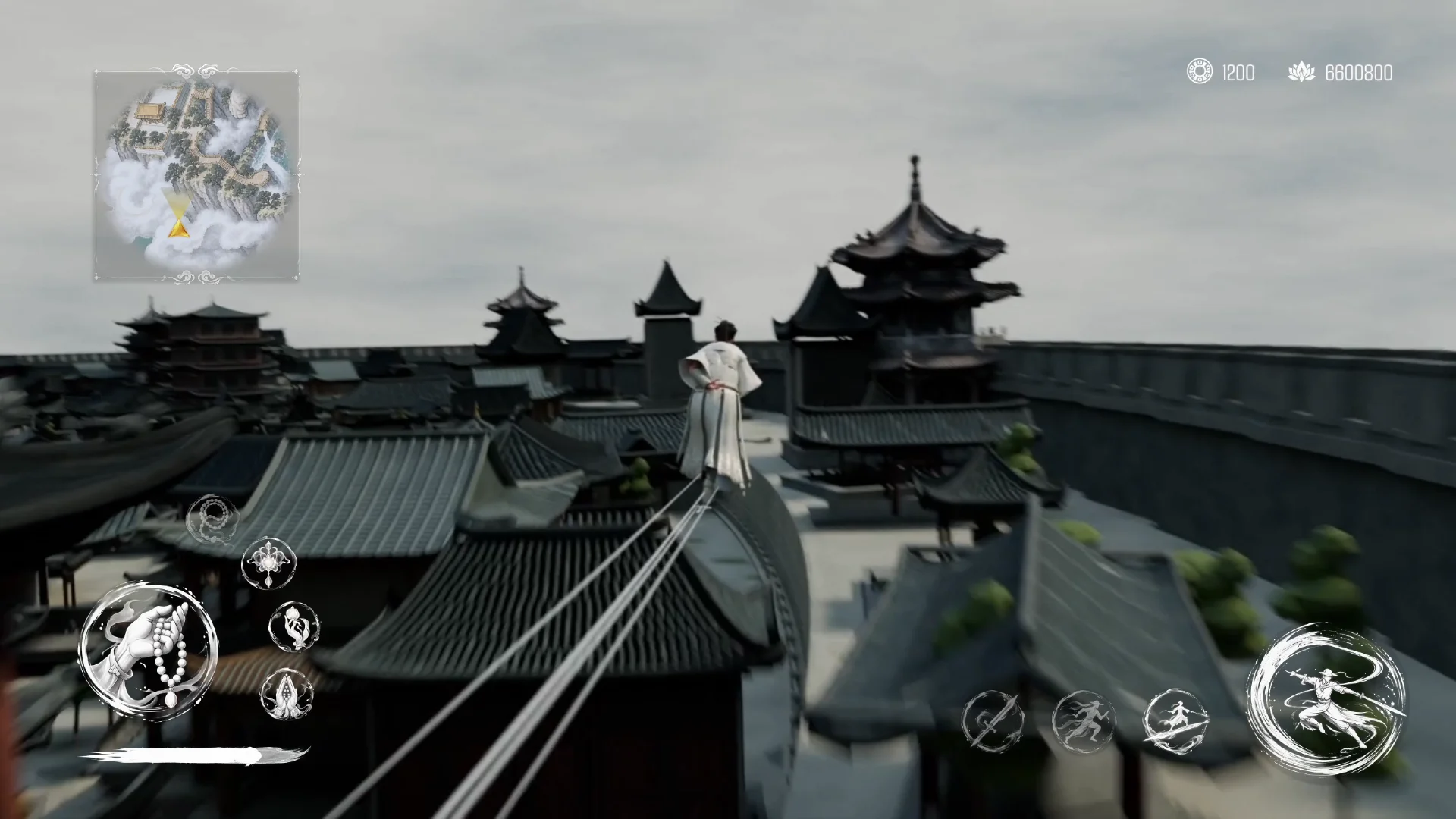
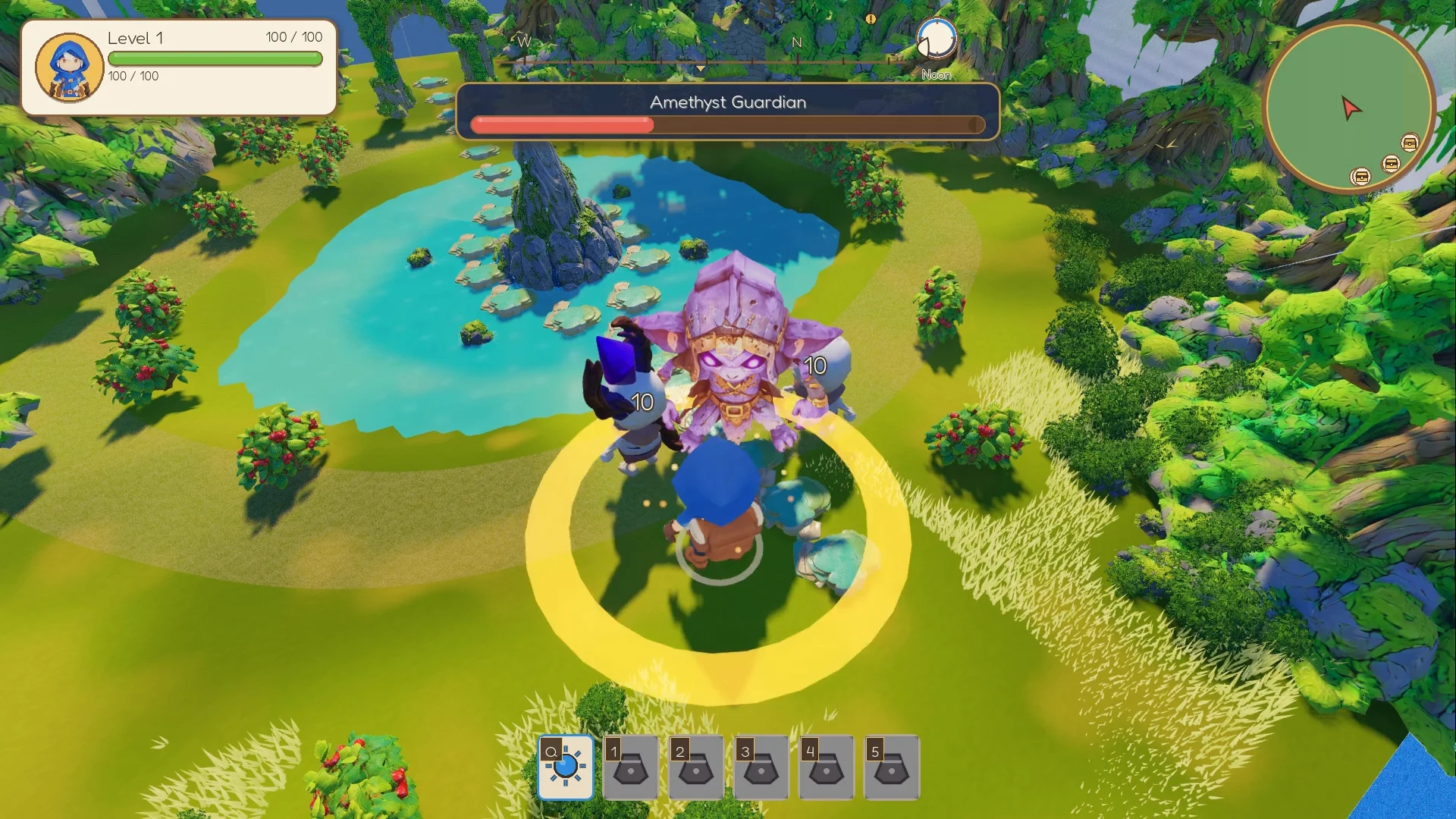
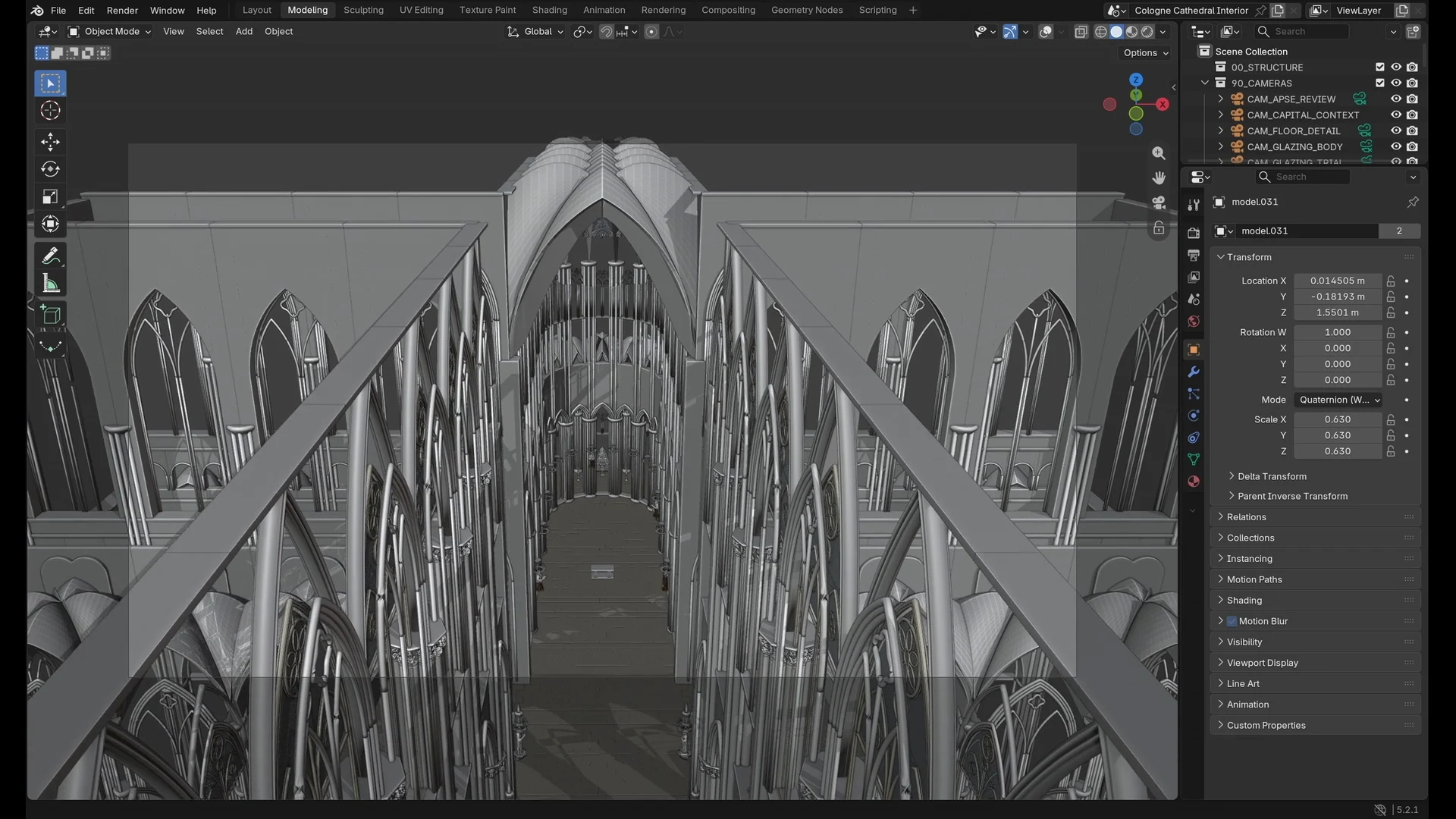
K3.1 Pro writes the scripts that drive Unreal Engine, Godot, Blender and FreeCAD, checks the result with native vision, and iterates. Every project below comes from Moonshot's K3.1 Pro launch post; click one to watch it in the player above. Some projects use credited third-party assets such as textures, HDRI skies and 3D scans.
 ▶ WATCH
Celestial palace battle game
Unreal Engine 5.8
 ▶ WATCH
Eastern RPG preview flythrough
Unreal Engine 5.8
 ▶ WATCH
3D action-adventure game
Godot 4.7.2
 ▶ WATCH
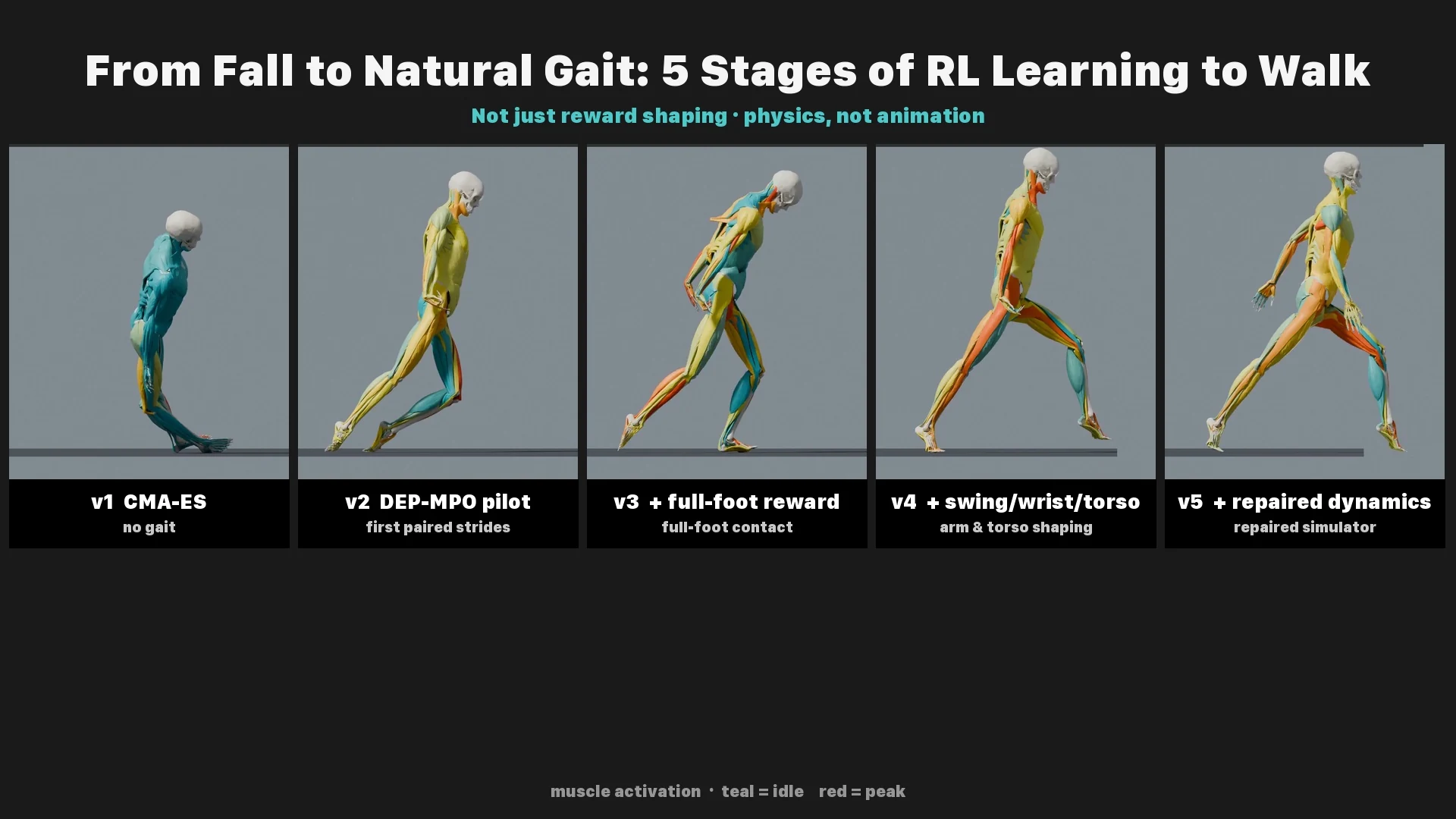
Teaching a simulated human to walk
Physics simulation · RL
 ▶ WATCH
Cathedral interior
Blender · browser 3D
 ▶ WATCH
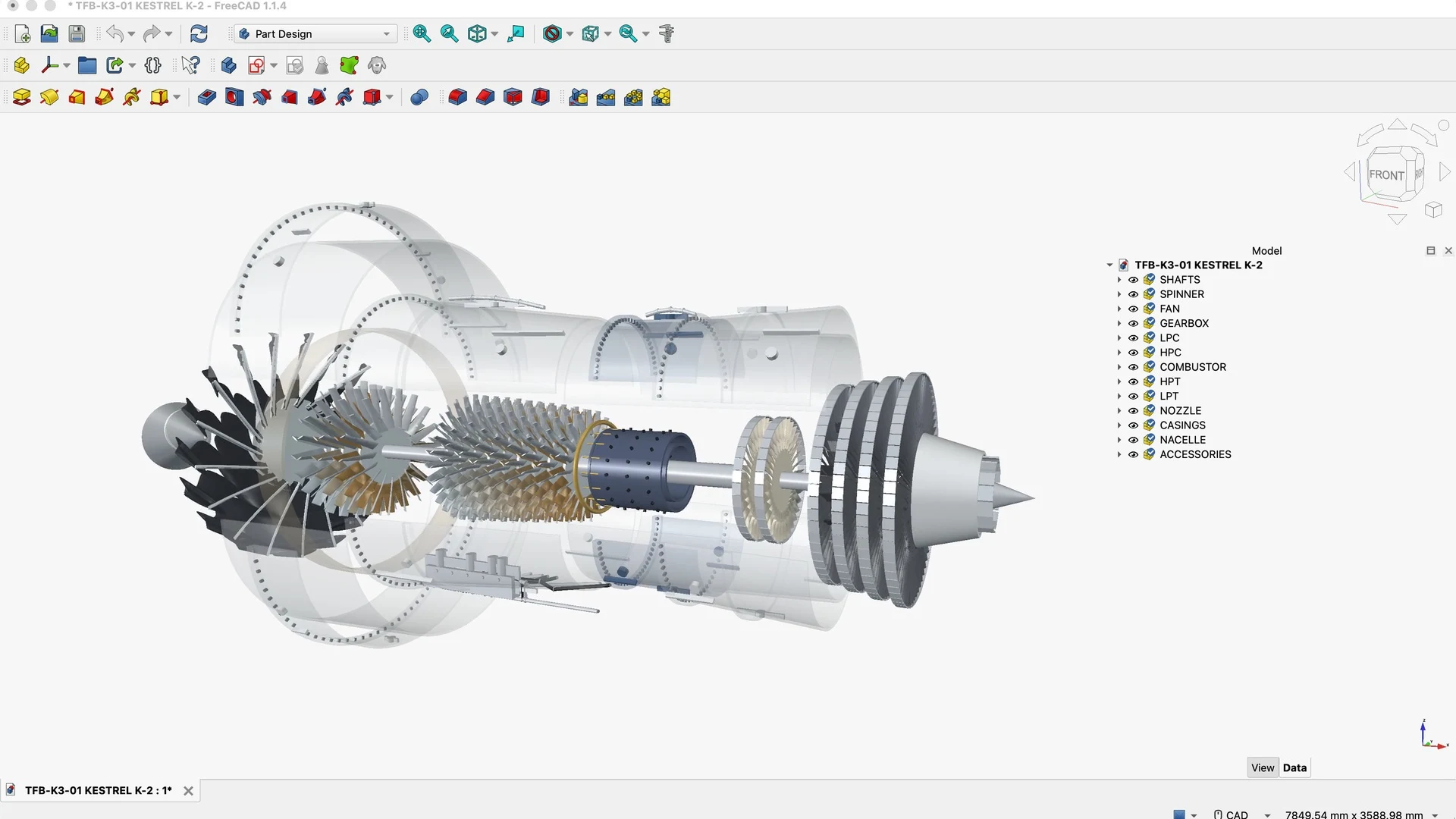
Turbofan engine
FreeCAD · Python
 ▶ WATCH
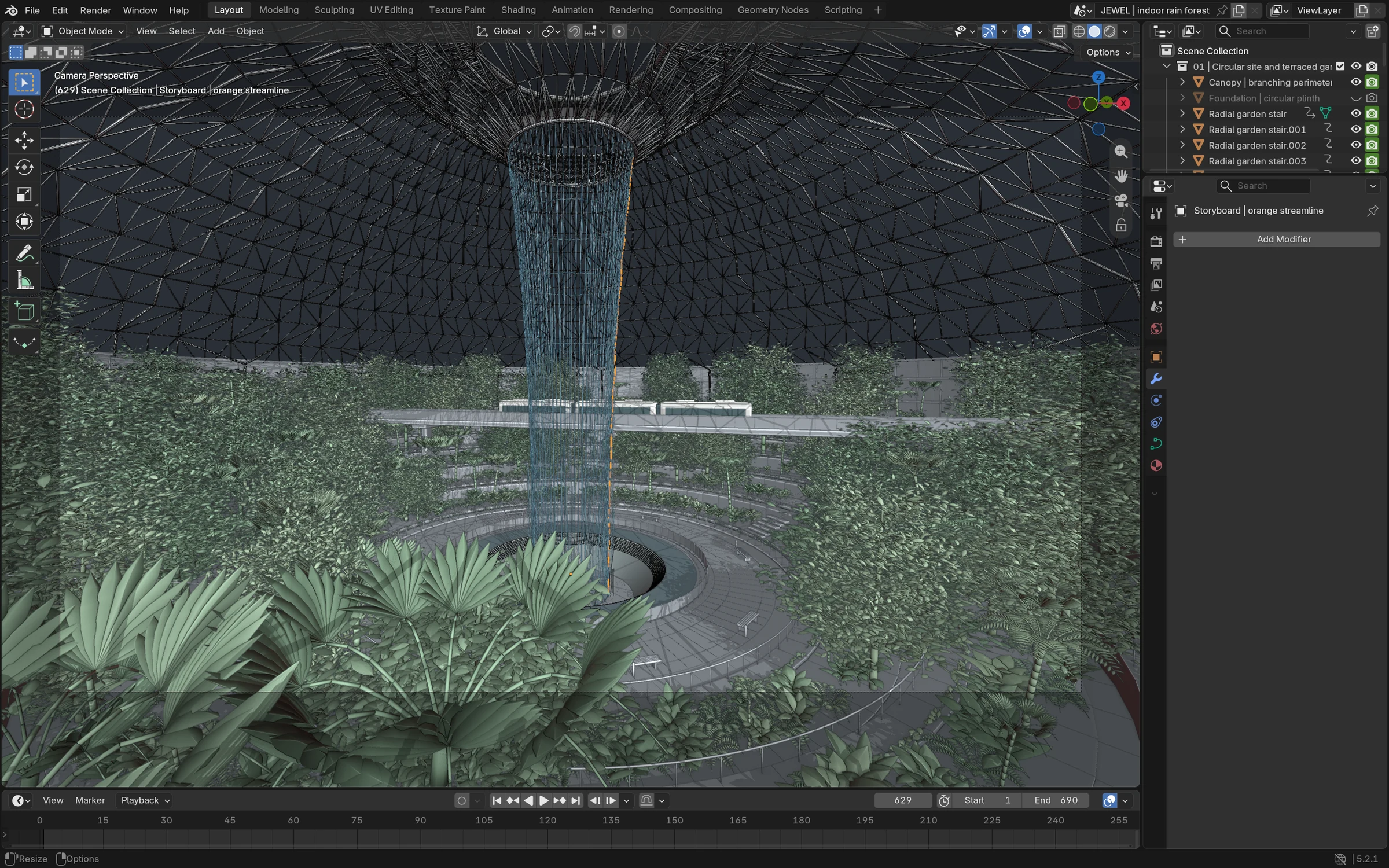
Airport indoor rainforest valley
Blender · Geometry Nodes · Cycles
 ▶ WATCH
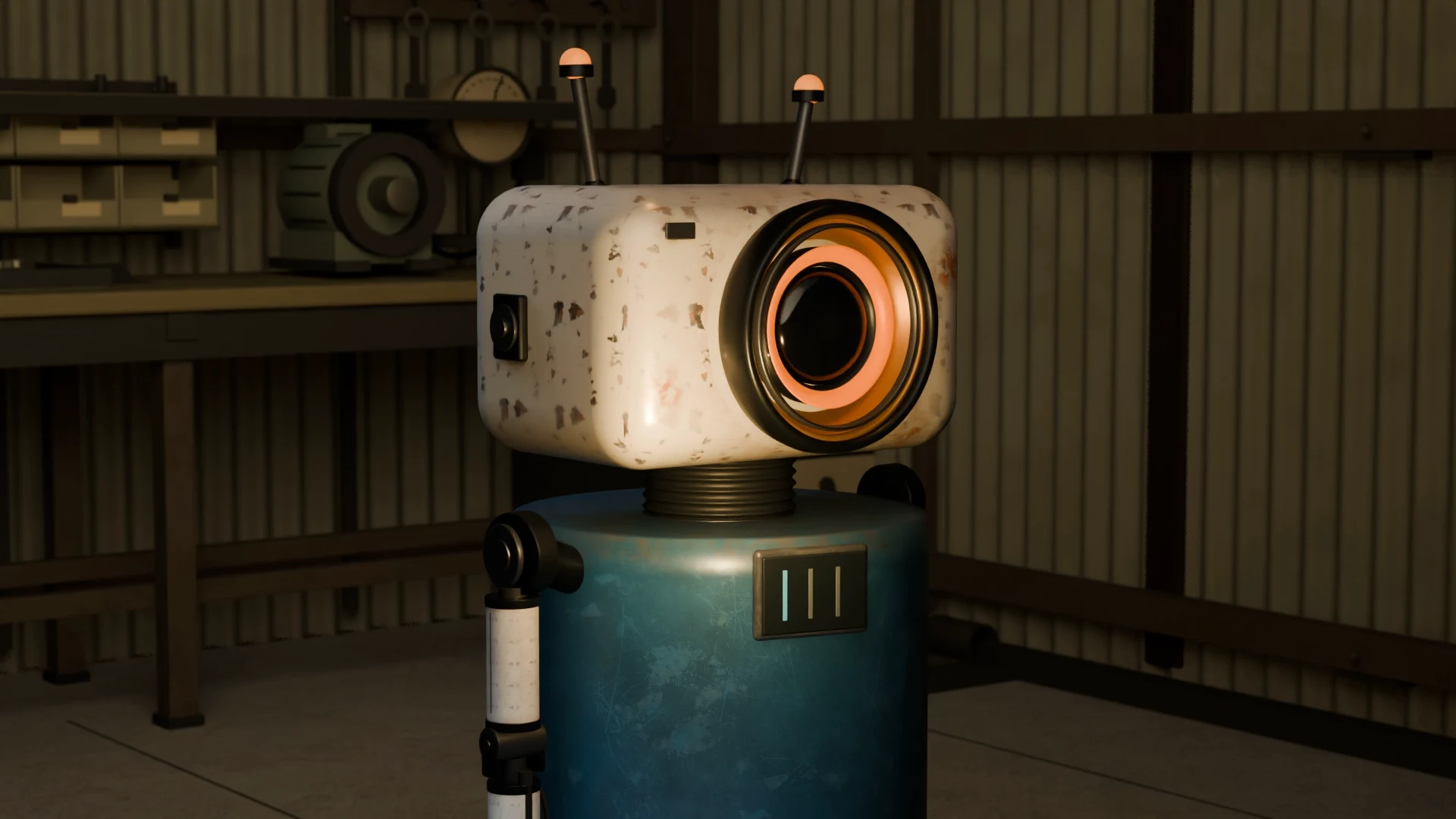
Post-apocalyptic robot short film
Blender 5.2 · Python
 ▶ WATCH
3D-printable tulou lamp
Python · trimesh
SCREENSHOTS: MOONSHOT AI — KIMI K3.1 PRO LAUNCH CASES · BENCHCAD WITH TOOLS: 92.7 (OPUS 5.5: 96.2)
Kimi Work · Finance
In Kimi Work, K3.1 Pro builds investment-committee decks and sector reports the way an analyst would: storyline first, the expectation gap versus consensus, earnings reviewed against guidance, and every figure traceable to a source. On Moonshot's internal finance tests it beats K3 by 7.2 points on financial modeling and 11.6 on financial research, and it tops OfficeQA Pro v2 (64.4).
Case studies · Long-horizon autonomy
01
Working with an open-source anatomical model of 296 skeletal and 402 muscle components, K3.1 Pro ran 167 missions and 420 independent reviews, diagnosed failures, fixed 36 shoulder-muscle moment-arm errors, and took the model from collapsing within seconds to 11.2 seconds of continuous walking.
Biomechanics · long-horizon research
02
Using Python, K3.1 Pro modeled the fan, reduction gearbox, compressors, combustor, turbines and external piping across 2,100 solids, with step-by-step assembly, an exploded internal view and spools animated at 2,780, 8,590 and 12,400 RPM.
CAD · Python scripting
03
A browser-based 3D reveal with exploded views, transparent shells and cross-sections. K3.1 Pro generated all 2,317 parts and 268 dynamic wire routes in code, and verified the result with 55 passing browser checks.
Browser 3D · self-verified
04
In Kimi Work, K3.1 Pro built an investment-committee deck on CATL and a quantum-computing sector report: the expectation gap versus consensus, earnings against guidance, the path after the print, and every citation traceable to a primary source.
Kimi Work · finance research
SOURCE: MOONSHOT AI — KIMI K3.1 PRO LAUNCH BLOG · K3'S LAUNCH CASES (CHIP DESIGN, MINITRITON) ARE IN OUR COMPLETE K3 GUIDE
Kimi K3.1 Pro vs Kimi K3
| Spec | Kimi K3 | Kimi K3.1 Pro |
|---|---|---|
| Released | July 16, 2026 | October 23, 2026 |
| Base | Original 3T-class MoE | Post-trained K3 (same base) |
| Context window | 1,048,576 tokens | 1,048,576 tokens |
| API price (in / out) | $3 / $15 | $2 / $10 |
| Cache-hit input | $0.30 | $0.20 |
| AA Intelligence Index v4.3.2 | 44 | 55 (#4 of 215) |
| Terminal-Bench 4.0 | ~13% (AA) | 65.7% (Moonshot) · 67.2% (AA) |
| Hallucination, hardest test | 23.4% | 8.3% |
| Output speed, Moonshot API | ~35 tok/s | ~73.5 tok/s |
| Open weights | Since July 27 (Kimi K3 License) | By Nov 4 (license TBA) |
| Where to use it | Moonshot, Bedrock, 15+ hosts | Moonshot only (for now) |
Coming from K2? K2-series API models close to new users on October 31, 2026 and retire by the end of December. See Kimi K3 vs K2 and the full K3.1 Pro guide.
Read before use
Moonshot's own launch post and API docs flag most of these; independent testing flags the rest. None are deal-breakers, but each one can break a straight swap from K3.
01
Requests that disable thinking get an HTTP 400. Use reasoning_effort low / high / max instead. Temperature, top_p, n and the penalty parameters are fixed, so remove them from existing K3 code.
02
Moonshot warns that moving a K3, K2.8 Preview or K2.7 Code session over to K3.1 Pro lowers output quality and cache hits. Start a fresh session. In Kimi Code, a mistyped model ID silently falls back to K2.8 Preview.
03
Artificial Analysis puts Opus 5.5 at 58 vs K3.1 Pro's 55. It trails badly on Terminal-Bench Science (38.1 vs 63.3), slightly on OSWorld and BenchCAD, and GPT-6 Astra still hallucinates less. Offensive-security skill was cut on purpose.
04
It used 150M output tokens to run AA's index (median: 87M) and writes ~14% more than K3, which eats part of the 33% price cut. Until the weights ship, there is no Bedrock or third-party hosting.
Availability
Chat on iOS, Android, HarmonyOS, or the web. A free tier exists; K3.1 Pro and K3 need a paid plan (Plus and up, 1M context on Pro).
The desktop app (Windows / Apple silicon, v3.1.0+) with K3.1 Pro built in, for deep research, finance decks, widgets and dashboards.
Terminal + IDE agent, included from the Plus plan up. Switch to K3.1 Pro or K3 with the /model command (1M context and Highspeed need Pro).
OpenAI-compatible endpoint, also on Amazon Bedrock and 15+ providers. Create a Kimi API key and select kimi-k3.1-pro (Moonshot only for now) or kimi-k3. Unlocks after a $1 top-up.
API platform →from openai import OpenAI
client = OpenAI(
api_key="YOUR_MOONSHOT_API_KEY",
base_url="https://api.moonshot.ai/v1",
)
resp = client.chat.completions.create(
model="kimi-k3.1-pro", # or "kimi-k3"
messages=[{"role": "user", "content": "Refactor this repo"}],
reasoning_effort="high", # low / high / max
)Pricing
| Per 1M tokens | Kimi K3 | K3.1 Pro |
|---|---|---|
| Cache-hit input | $0.30 | $0.20 |
| Cache-miss input | $3.00 | $2.00 |
| Output | $15.00 | $10.00 |
| AA Intelligence Index v4.3.2 | 44 | 55 |
Flat pricing across 1M context · >90% cache-hit rate in coding workloads · K3.1 Pro Highspeed: $4 / $20
Latest guides
Kimi K3.1 Pro launched October 23, 2026: 33% cheaper than K3 at $2/$10, AA Index 55 (#4 overall), weights due Nov 4. Full benchmarks, plans, API and when to switch.
Kimi K3 vs Claude Opus 5.5: $3/$15 vs $4/$20 pricing, independent benchmarks, per-task costs, worked examples for coding agents, RAG and batch, when to switch.
Kimi K3 vs GPT-6 Astra: $3/$15 vs $10/$50 pricing, the 272K surcharge, independent benchmark scores, privacy, open weights, and when switching actually pays.
Kimi K3 vs Claude Fable 5.1: $3/$15 vs $10/$50, four worked cost examples, independent benchmarks, the Opus 5.5 twist, and a clear guide on when to switch.
What the Kimi K3 License allows: commercial use, fine-tuning, the $20M Model-as-a-Service clause and attribution rules, compared with K2, Llama and Qwen.
Set up Kimi Code CLI with K3: install per OS, login, config.toml, effort levels, MCP, IDEs, Claude Code/Cline setup, plan prices, and when K2.7 or K2.8 wins.
FAQ
Kimi K3.1 Pro is Moonshot AI's upgraded flagship, released October 23, 2026 as the first model in the K3.1 series. It is a post-trained Kimi K3 (same 3T-class base, 1M context, image and video input) with far more post-training. It scores 55 on Artificial Analysis's Intelligence Index (#4 of 215, up from K3's 44), cuts hallucinations on Moonshot's hardest test from 23.4% to 8.3%, and runs about twice as fast on Moonshot's API. There is no plain "K3.1" yet; K3.1 Pro and K3.1 Pro Highspeed are the only K3.1 models.
API pricing is $0.20 per million cache-hit input tokens, $2 input and $10 output, a third cheaper than K3. The Highspeed variant (2-3x faster) costs $4 / $20. The model ID is kimi-k3.1-pro and the API unlocks after a $1 top-up; in Kimi Code it needs the Plus plan or above (Pro for 1M context and Highspeed). Moonshot promises open weights by November 4, 2026; the license has not been announced yet.
Kimi K3 is Moonshot AI's flagship model launched July 16, 2026 — the world's first open 3T-class model. It has 2.8 trillion parameters in a mixture-of-experts design (16 of 896 experts active per token), a 1,048,576-token context window, native image/video understanding, and is built on the new Kimi Delta Attention and Attention Residuals architecture.
Kimi K3 officially launched on July 16, 2026, and is available today on Kimi.com, Kimi Work, Kimi Code, and the Kimi API. Some users search for it as "Kimi 3.0" — Moonshot's official name is Kimi K3. The full open-weight release (model weights + technical report) followed on July 27, 2026.
Kimi K3 specs: 2.8T total parameters (Stable LatentMoE, 16 of 896 experts active per token), 1M-token context window, native image/video understanding, Kimi Delta Attention + Attention Residuals architecture, Gated MLA, MXFP4 weights with MXFP8 activations, about 104B active parameters per token, low / high / max thinking effort, and the custom Kimi K3 open-weight license.
No — k3-kimi.com is an independent fan-made guide. The official Kimi AI website is kimi.com, where you can log in (Kimi login) and use K3 on a paid plan. Official docs live on Moonshot's Kimi API Platform. We just track benchmarks, pricing, and news.
On desktop, download the Kimi Work app (version 3.1.0 or later) for Windows or Apple silicon Mac from the official Kimi site — K3 is built in. Alternatively use kimi.com in any browser with no download, or run Kimi Code in your terminal and pick Kimi K3 with the /model command. Mobile apps are on iOS, Android, and HarmonyOS.
The full Kimi K3 weights have been on Hugging Face (moonshotai/Kimi-K3) since July 27, 2026 under the Kimi K3 License, alongside the technical report. They are about 1.56TB in MXFP4 — but note a 2.8T model needs supernode-class infrastructure (64+ accelerators recommended), so most users should stick to the app or API.
API pricing: $0.30 per million tokens for cache-hit input, $3.00/M for cache-miss input, and $15.00/M for output, with a 90%+ cache hit rate in coding workloads. Cache writes cost $3/M (5-minute) or $6/M (1-hour). In the app, confirmed K3 access needs a paid plan: Plus (¥99/month) for K3 at 256K context, Pro (¥199/month) for 1M.
Sign up on Moonshot's Kimi API Platform, create an API key, and select the kimi-k3 model. The official docs on the platform cover authentication, endpoints, and the KDA prefill-cache behavior. In the Kimi Code CLI, run /model and choose Kimi K3 — no manual key needed if you're logged into your Kimi account.
Our take: yes for long-horizon coding, research, and agentic work. It's #1 on Frontend Code Arena, beats Claude Opus 4.8 and GPT-5.5 on most coding benchmarks, handles 1M-token contexts, and costs about half as much. Weaknesses: still trails Claude Fable 5 and GPT-5.6 Sol in overall polish, and output speed (~35 tok/s on Moonshot's endpoint) favors long runs over snappy chat.
Partly. The Kimi app has a free tier, but Moonshot lists K3 access only for paid plans (Plus and above) and does not say which model free users get. The API is paid ($0.30/M cached input, $3/M input, $15/M output) and unlocks after a $1 top-up. The open weights are free to download under the Kimi K3 License.
On Moonshot's launch suite, K3 ranks #1 on Program Bench (77.8), SWE Marathon (42.0), SpreadsheetBench 2 (34.8), Automation Bench (30.8) and BrowseComp (91.2), and #2 on Terminal-Bench 2.1 (88.3 vs Sol's 88.8). On the community-voted LMArena it is #1 in Frontend Code with a 76% win rate. Artificial Analysis scored it 57 at launch; on the current index (v4.3.2) it scores 44, #3 among large open-weight models. Moonshot itself says it still trails Fable 5 and GPT-5.6 Sol overall.
Nearly everything: 2.8T vs 1.0T parameters, 896 vs 384 experts, 1M vs 256K context, native vision for the first time, the new KDA + Attention Residuals architecture (~2.5× scaling efficiency, up to 6.3× faster long-context decoding), and a jump from #18 to #1 on Frontend Code Arena.
Open weights, yes: released July 27, 2026 under the Kimi K3 License (not an OSI open-source license). Realistically, a 2.8T-parameter model needs serious infrastructure — Moonshot recommends supernode deployments with 64+ accelerators. Most people should use the app or API.
Per Moonshot: don't switch models mid-session (thinking-history sensitivity), it can be overly proactive on ambiguous tasks, and it still trails Fable 5 / GPT-5.6 Sol in overall UX. Independent tests also note slower output speed (~35 tok/s) — better for long runs than snappy chat.
Long-horizon agentic work: it built playable games from single prompts, designed a working chip autonomously in 48 hours, wrote a GPU compiler (MiniTriton) from scratch that rivals Triton, reproduced astrophysics research in 2 hours that typically takes 1–2 weeks, and produces interactive research reports and video edits in Kimi Work.